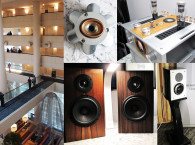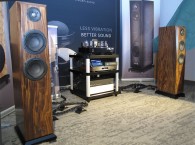


It was April in Schaumburg, IL, and time for another whirlwind tour of the latest in audiophile tech. Being the continent’s largest consumer-facing show, this year’s Audio Expo North America (AXPONA) numbers tell a tale of international industry with brands from at least 50 countries. My expert photographer Kurt Close and I practically flew through the 213 rooms spread over 12 floors to bring you this survey of what’s new and what I thought was notable... let’s go!
Following in the footsteps of Devialet, Cabasse, and Naim, Marantz was exhibiting a very distinctive, good sounding coincident integrated stereo loudspeaker. The GaN FET-equipped, high fashion $5500 Grand Horizon, big brother to the $3500 Horizon, takes the shape of a 21” flattened, fabric-covered sphere, with a lighted circumferential touch control for volume and optional slender pale wooden tripod legs. Advertised as “wireless,” the Grand Horizon requires only a connection to power, and is squarely aimed at the consumer shopping for a lifestyle audio playback system that harmonizes with their modernist décor. This article highlights the problems and potential causes of low-frequency sounds (typically below 200Hz) and infrasound (sounds below 20Hz) at very high levels, and its potential effects over some individuals, causing significant annoyance and discomfort. Although technically a stereo speaker, the small overall dimensions provide little separation, so two can be paired for true wireless stereo.

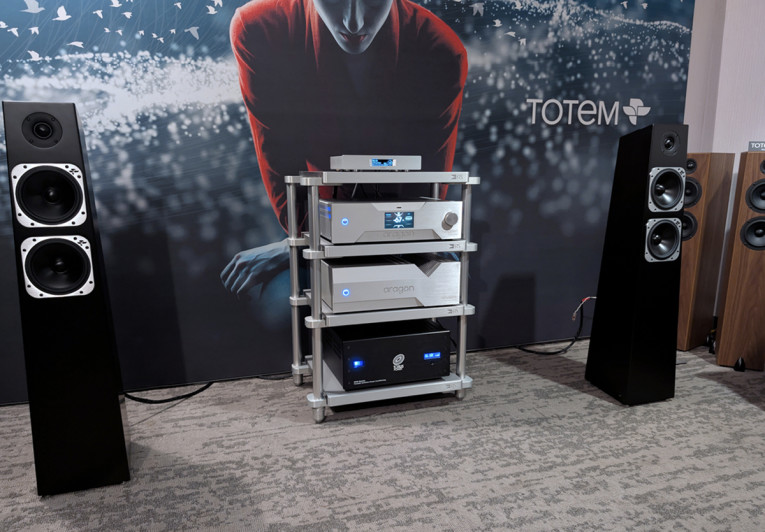
The Tbirds were being driven by a stack composed of Indy Audio Labs’ versatile new all-American $20,000 Tungsten pre feeding their Titanium “dual monoblock” 400W into 4Ω solid-state power amplifier. Designed with high Class A bias, the $13,000 Titanium delivers 20W into 8Ω before transitioning into Class B. The Tungsten is well appointed with balanced and unbalanced I/O plus MM/MC phono in. Digital I/O are also represented with AES3 unbalanced and optical along with four HDMI 2.0 ins (includes pass-through) and one HDMI out. DSP functions, 192kHz max, include fully adjustable one-, two- and three-way crossover topologies plus 10 bands of parametric EQ. Room wiring was provided by the fine folks at Cardas.
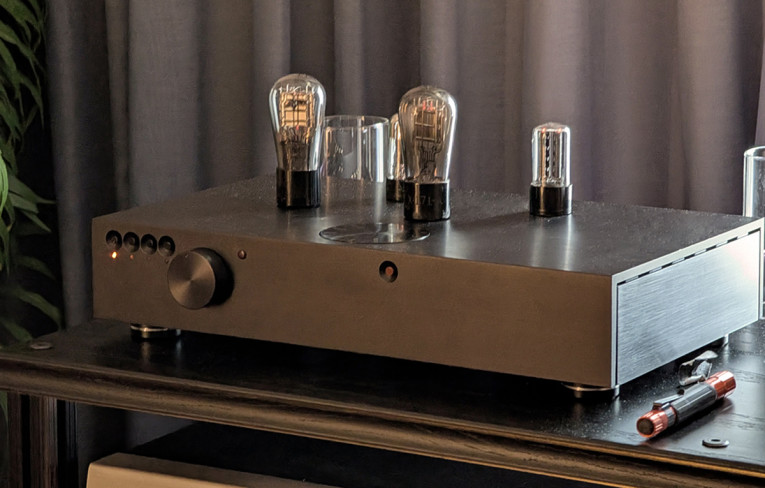
First reported last year, the hybrid hollow-state/Class-D Billie preamp has now grown up to a third iteration. MK3 introduces a modular architecture, allowing users to swap and upgrade components for tailored sound quality and future-proofing. Heaven 11 offers two editions, the $2995 “Classic” and the $2750 “Spartan,” with differing amplifier options and a newer ESS ES9039 DAC. The buyer can now specify the amplifier subsystem; an ICEpower 200AS2 carried over from the MK2, or a Hypex NC252MP. The MK3 also boasts an adaptable MM phono stage and enhanced connectivity, which includes a USB-C port.
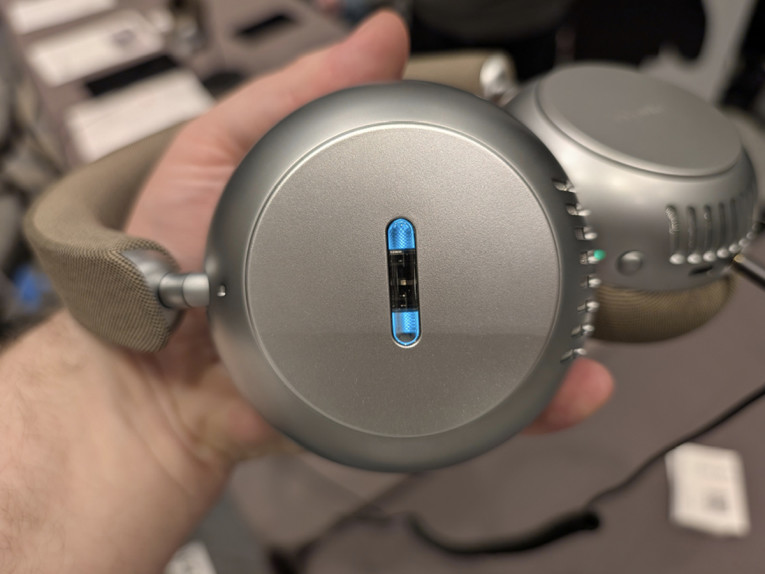
VerVent Audio, parent of the Focal and Naim brands, was touting its elegant new active wireless $39,999 Focal Diva Utopia. The big news, however, was its new Focal Utopia Cinema custom integration. The Utopia Cinema launched in February 2025, and is designed for private cinema rooms of up to 2153ft2. It includes three-way main loudspeakers, the $11,999 Cinema LCR, and one or more $5,999 Cinema SUB subwoofers. VerVent also had the new $1299 Bathys MG wireless active noise-cancelling headphones. With a low distortion 40mm magnesium “M” profile dynamic driver, the stated response is 10Hz to 22kHz ±3dB. In wired USB mode, the built-in DAC converts up to 192kHz/24-bit.
For Vinyl Aficionados
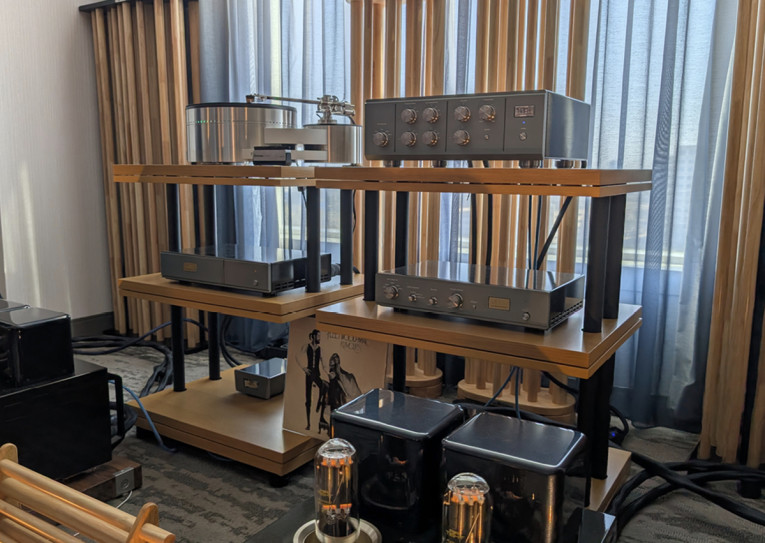
Into vinyl and have deep pockets? AXPONA exhibitors are always pandering to the phonograph faithful, and AXISS was no exception. For spinning polluting plastic platters, they were showing off Yukiseimitsu’s $31,975 AP-01EM turntable, which supports mounting of two third-party tonearms, feeding the ~$14,975 AirTight ATC-6 preamp paired with the ~$13,575 ATE-5 phono stage. Optional arms are available from Glanz, its $8,975 MH-1000S or $4,975 MH-9BT. An alternative tonearm from Reed was also on display, its current ~$6,600 3P with a new $695 Panzerholz engineered wood fiber armwand upgrade. PaperStone, Panzerholz, Richlite, and the like exhibit exceptional vibrational damping. Also from Reed, its dapper new 3A turntable will cost you $19,975 for a single tonearm version.
Power Amps
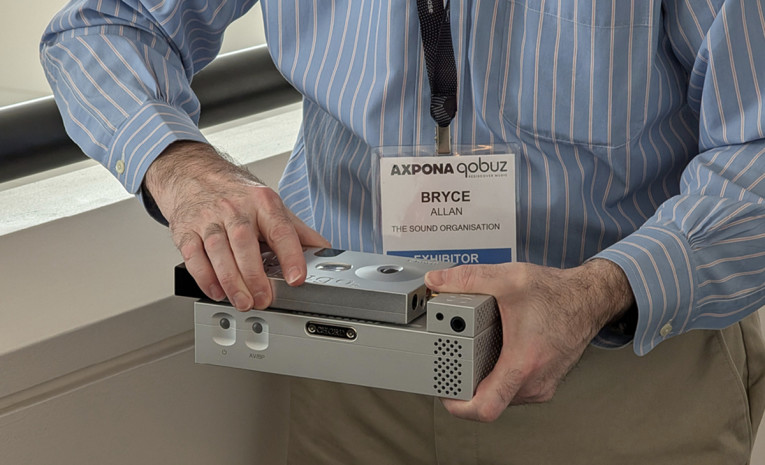
Speaking of power amps, I was fascinated by the new Suzi, a modular system that could only be dreamed up by the eccentrics at Chord Electronics. The physically tiny MOSFET Suzi Amp delivers 30W into 8Ω, and allows direct integration of the new Suzi Pre preamplifier, Hugo 2 or Hugo 2 and 2go. “The Suzi has three primary use case scenarios: as an analog pre/power amplifier (a Suzi Pre with a Suzi Amp for $8575); a DAC/amplifier (a Suzi with a Hugo 2), plus a streaming amplifier (a Suzi with a Hugo 2 and 2go for $9325).” The $5275 Suzi can also be used as a standalone amplifier. Inputs are only unbalanced analog, and the Suzi Pre or Hugo 2 ingeniously slot into the Suzi Amp without detracting from the tidy rectangular shape.
New Packages
Vandersteen was showing a new electronics package. The $15,000 L5-ACC Audio Control Center is a minimalist analog preamp with benefits. In addition to a direct mode, which bypasses all processing, the L5-ACC includes useful retro circuitry for bass and treble boost or attenuation, a “matrix solution,” and a stepped mono-to-stereo control.
The folks at Von Schweikert had their $58,000 VR.thirty with FOUNDATION. After the show, I conversed with co-owner Gary Leeds via e-mail about his VR.thirty. He told me the drivers “are Accuton for bass and mids and Scan-Speak for the tweeter. We use a high-order, phase-coherent crossover topology to control the driver breakup modes, which are more challenging to manage with the otherwise superb Accuton ceramic drivers. The design results in a clean, smooth, phase-coherent transition between the frequency bands. The hybrid ceramic/aluminum woofers are powered by an 800W amplifier with an isolation transformer between the analog network and amplifiers.
The amplifier incorporates a rear panel-mounted amplitude control for easy attenuation of the woofers for near-wall placement as close to 12”...no DSP is required to achieve flat in-room response to near 20Hz in most rooms. The beryllium tweeters extend smoothly to 40kHz...and exhibit none of the harshness one sometimes sees when using this material, because we run the tweeter only within its optimum bandwidth. The rear panel uses a ribbon driver run out of phase to the front wave, also with gain control to create a more omnidirectional ambient field for better rendition of spatial information. In a control room or monitoring environment, the rear tweeter can be deactivated if desired.”
One of my perpetual favorites for accurate and enjoyable loudspeakers is ATC. A new addition to its roster was the SCM20ASL, an active two-way stand mounter with a sealed cabinet being shown by distributor Lone Mountain. It features “...the same complement of proprietary drive units, amplifier, and cabinet designed and manufactured in-house by ATC in England.” Specifically, the 6” mid/bass is handled by their SB75-150SL driver, “designed with a large 3” voice coil and a short coil/long gap configuration.” That direct radiator is paired with one of their SH25-76S 1” soft dome tweeters.
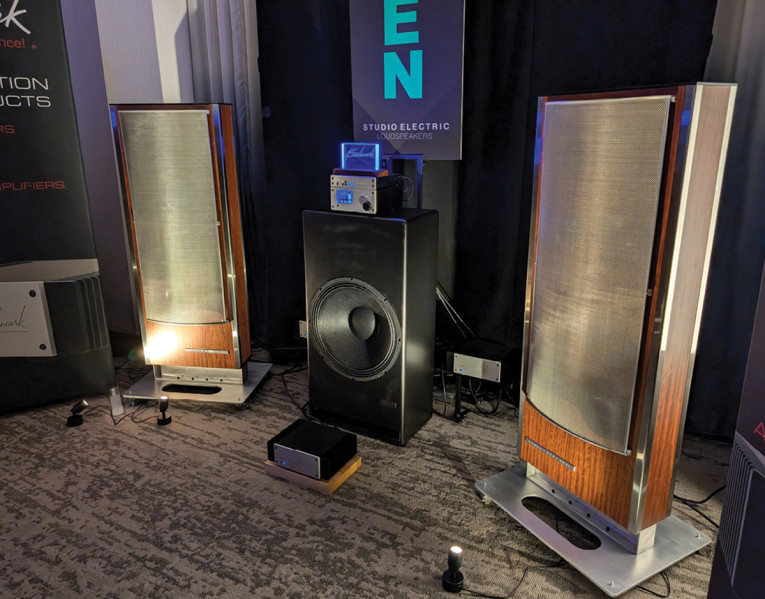
Another personal fave is Grimm Audio, who had the new $4900 PW1 phono stage, along with the latest revision of its LS1 reference loudspeaker mated to its SB1 compact stereo sub. Pricing ranges from $38,000 to $44,150 per pair depending upon finish. The LS1c + SB1 system comes with all connectivity cables, and the SB1s are $12,700 by themselves. At the show, Grimm was using its own SQM balanced (XLR) cables to connect the PW1 to the LS1c.
Cambridge Audio unveiled the $1799 EVO One tabletop entertainment hub, the $1799 EXN100 streamer, and the $2399 EXA100 integrated amp. The EVO One is another coincident integrated stereo speaker system. Utilizing 14 drivers, each powered by 50W into 4Ω of Class D amplification, the transducer complement includes four 1” silk dome tweeters, four 2¼” aluminum-coned mids, and six 2¾” long throw woofers. The built-in DAC will accept up to 32-bit/192kHz data for an overall system frequency response of 38Hz to 20kHz ±3dB while being -10dB at 32Hz...not bad for a “table radio.”
With a nice big 6.8” display, HDMI eARC, Bluetooth 5.1 A2DP/AVRCP, 100 Base-T Ethernet, Wi-Fi, unbalanced analog and AES3 optical and unbalanced, the Roon-Ready EVO One offers plenty of versatility. Its new EXN100 is a mid-priced dedicated streamer based on Cambridge’s Gen4 StreamMagic module feeding a Sabre 9028Q2M DAC chip. It includes preamp mode and balanced analog outs for longer cable runs. Third up is the EXA100 integrated. With an ES9018K2M DAC, HDMI eARC, Bluetooth (aptX HD), asynchronous USB, balanced and unbalanced analog ins along with AES3 unbalanced and optical, most all common I/O bases are covered. Frequency response is 3Hz to 40kHz ±1dB at 100W RMS into an 8Ω load and 150W into 4.
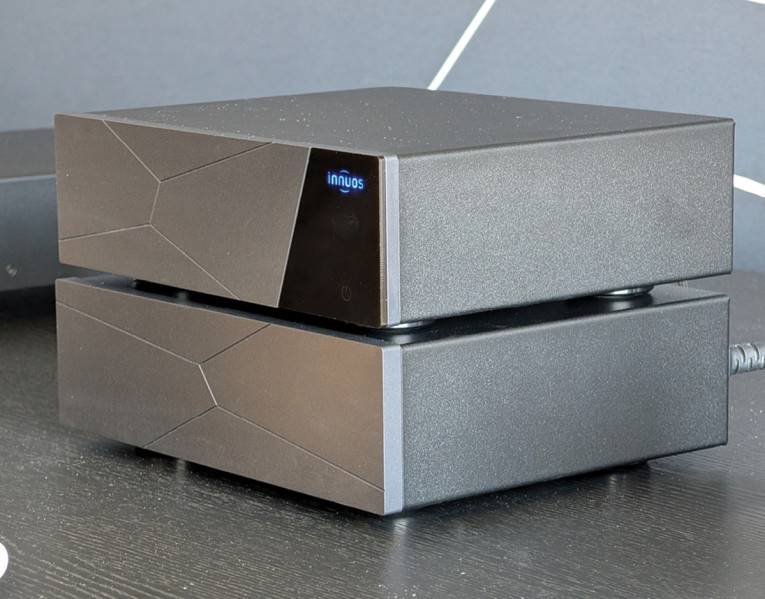
From the folks at Innuos comes the new Stream Series, consisting of two models, the entry-level Stream1 and the top-of-the-line Stream3. The base model Stream3 has a built-in USB audio output. Buyers can option it out with the new, dual-mono PhoenixDAC module with RCA and XLR outputs along with OCXO-timed FEMTO clocks, or maximize the fit with a different output module, including their standard DAC, Performance DAC, PhoenixUSB, PhoenixI2S, or SPDIF boards.
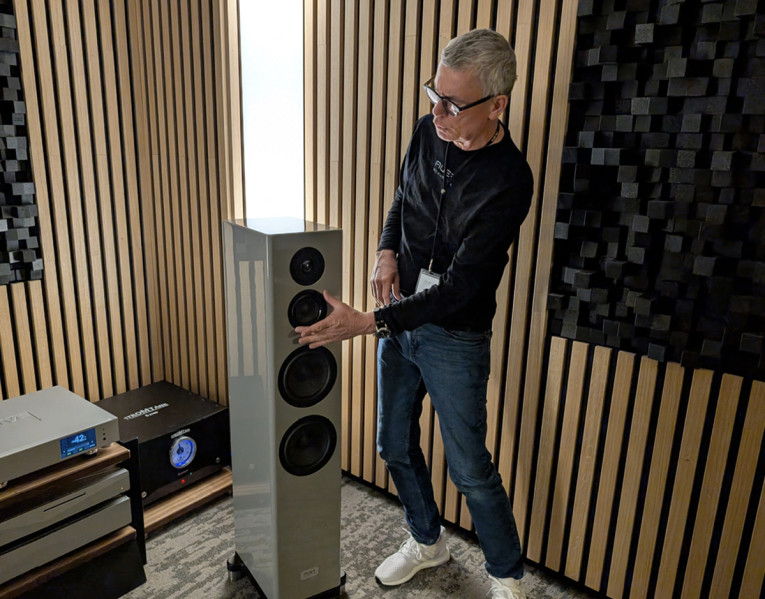
For those with deep pockets and a lust for retro high fidelity, look no further than Volti Audio and its very high efficiency New Vittora, strangely enough an update of the original 2011 all-horn-loaded three-way Vittora. The $42,000 latest version features larger mid- and low-frequency horns along with an improved crossover. At the show, they had a $50,000 “ELF” system under development that consisted of a pair of New Vittora along two bass cabinets, amplifiers, and a preamp.
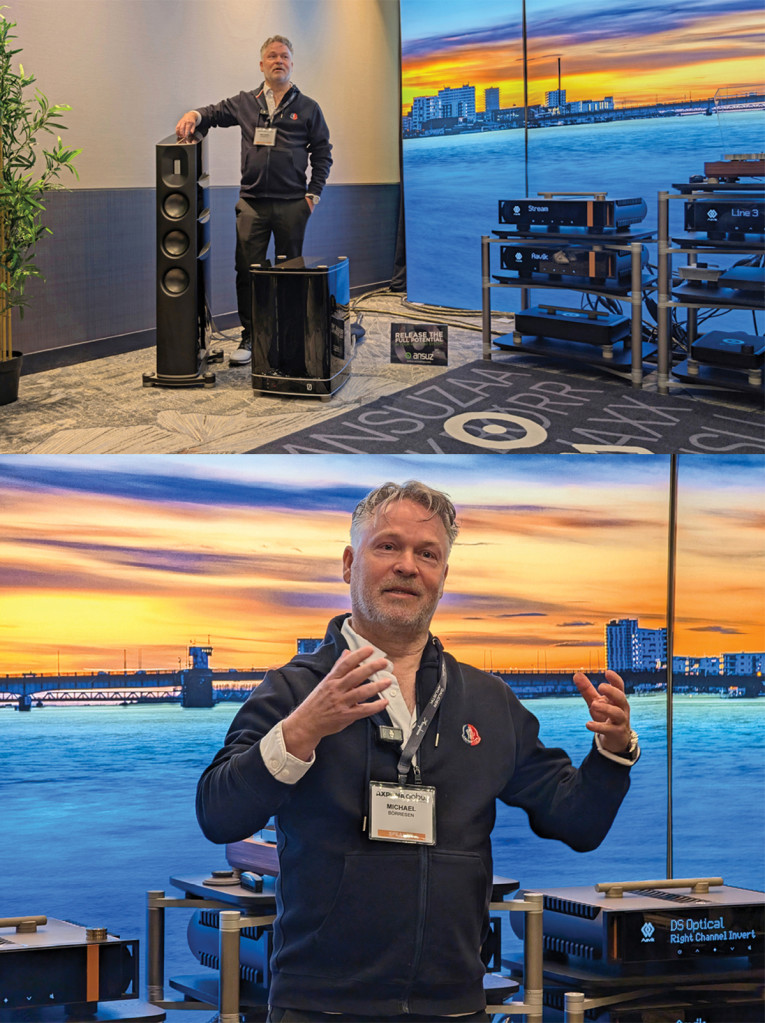
While we are still on the subject of loudspeakers, I must give a hearty shoutout to Next Level Hi-Fi and Audio Group Denmark. In years past, I have found Audio Group Denmark’s wares to be accurate and masterfully built but not soul stirring. This year’s demo was different, with the new Børrensen M2 floor standing slim towers and pre-production sub sounding quite divine. Pricing on the sub is yet to be established but at $190,000 per pair, the speakers lived up to their insane price. They were marvelous. With a frequency response of 30Hz to 50kHz (no tolerances given) and a sensitivity of 86dB at 1W, the driver complement includes an all in-house “planar ribbon,” a 5” “zirconium” mid, and two 5” bass units. They also showcased the 200W into 8Ω Class A Aavik R-880 integrated, which includes native support for DS Audio’s optical phono cartridges.
As you may have noticed, several mega-distributors were at the show, with each representing a significant chunk of manufacturers. Another example of that is GTT Audio, who were showing new gear from Master Fidelity and Audionet. (Master Fidelity is a Canadian company and original Merging Technologies partner in the development and promotion of the MERGING+NADAC series of products for the high-end audio market.) Let’s start with Master Fidelity’s $23,000 NADAC D, “...an entirely new concept that takes challenges from past developments and overcomes them one by one.” Internally 1-bit, the Master Fidelity folks eschew monolithic multi-bit DAC chips (AKM, ESS, etc.) or R2R architectures in favor of a home-grown DSD-like approach.
The NADAC D’s AES3 balanced, unbalanced and optical inputs accept standard streams up to 192kHz along with DoP64, while the USB (Audio Class 2) input understands up to 384kHz LPCM and native DSD up to DSD8 (8x or DSD512). Both a balanced and unbalanced headphone output is present on the front panel and future support for Ravenna is in the works. Also new is the $27,500 NADAC C, a standalone, low jitter external clock. With six 10MHz outputs and two 75Ω AES word clock outputs (44.1kHz to 1536kHz), the NADAC C is designed to provide master clocking for a NADAC D as well as your entire suite of digital audio devices.
Gauder Akustik was again entertaining visitors to their suite with the new Elargo 200 floorstander. The $46,975 three-way employs two 9” bass drivers, a 6.5” mid-range, and a 1” beryllium tweeter. A “Double Vision” symmetrical crossover uses Dr. Gauder’s usual 60dB/octave slopes and includes a time delay control for optimal phase and impulse response. Customizable bass extension modules are also available.
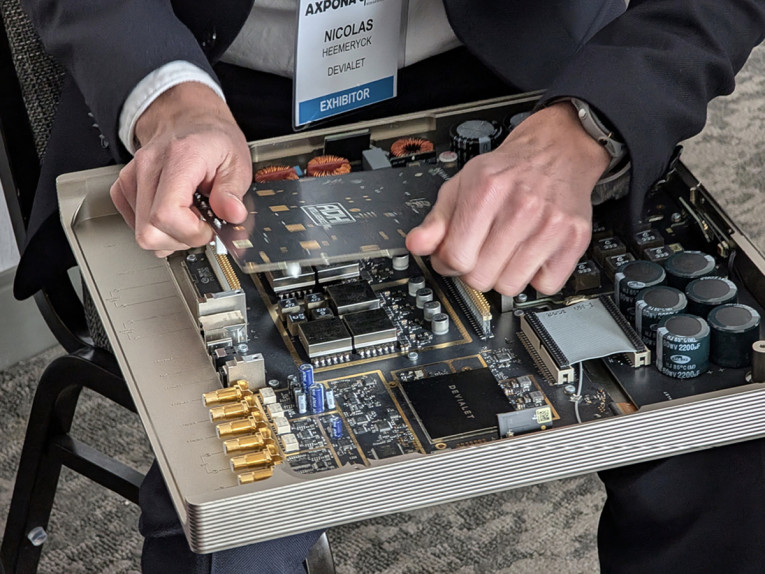
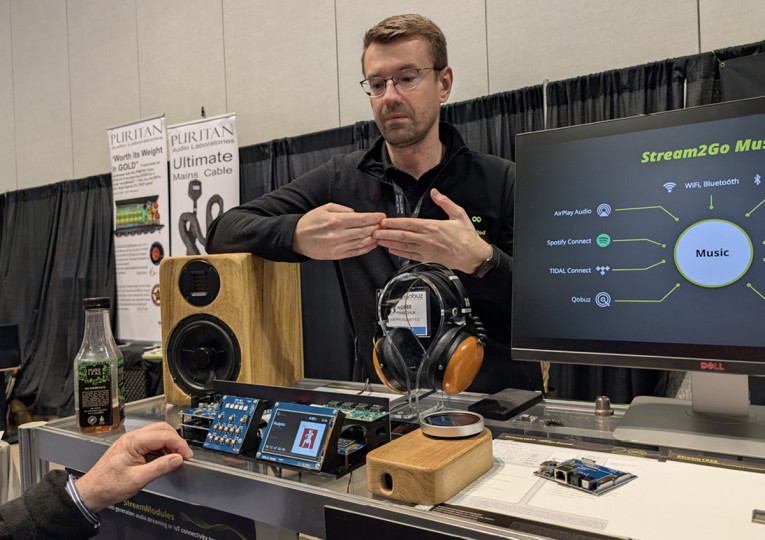
The latest Stream210 is a quite complete streaming system-on-chip (SoC), with a dual core ARM Cortex-A32 clocked at 1.3GHz, 2Gb of RAM and flash memory, four pulse-density modulation (PDM) inputs, analog and digital I2S audio I/O, a MIPI serial display/peripheral interface, and multiple GPIO/UART/I2C/SPI/ADC/touch interfaces. In addition, there’s Bluetooth including BLE and LE Audio, Wi-Fi 6, and USB 2.0 host/device support. As I said, complete, and ready for wireless speakers, AVRs, connected music streamers, but also portable audio devices and even high-end Wi-Fi headphones.
SACD-Related
Anything SACD-related is something of a rarity these days, so I was pleased to learn of Forte Distribution’s announcement of Shanling’s ONIX Zenith XST20 SACD/CD transport. This touchscreen equipped $2,399 top-loader offers Red Book-derived streams on AES3 optical and unbalanced along with SACD playback (DSD64) via D2P (DSD-to-PCM) and DoP (native DSD formatted to fit into a PCM data word) on an I2S spigot. DSD64 streams are transcoded to LPCM and presented on the USB connection.
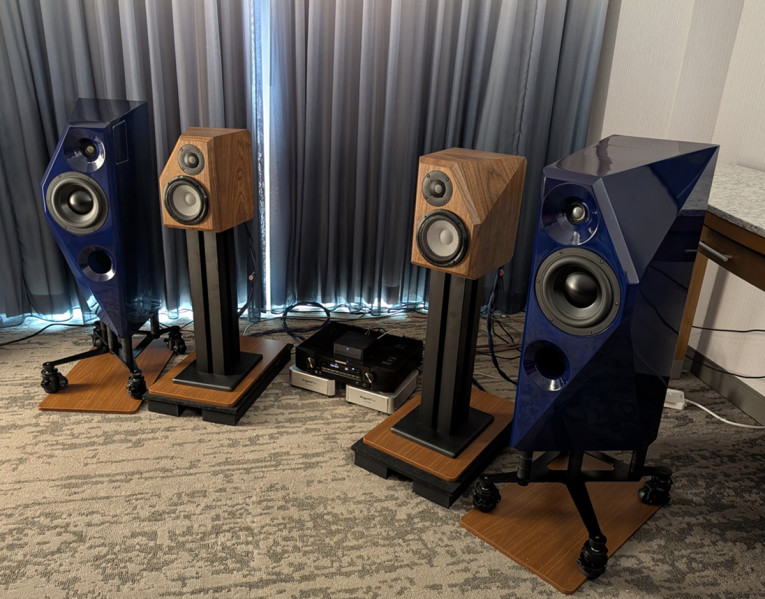
Mega-rep Harmonia Distribution was demo’ing the new $3790 Harbeth NLE-1 active two-way. With both balanced and unbalanced analog inputs, dual 50W Class-D amplifiers drive a ferrofluid-cooled 0.75” tweeter and 4.3” in-house mid-woofer for a free-space frequency response of 0.75kHz to 20kHz ±3dB. Digital signal processing enables a switch-selectable “personality mode,” which yields an “extra octave of bass” when operating at lower sound pressure levels.
Also new to their speaker stable is the $23,400 Icon 12 from Norway’s Ø Audio. A floor standing two-way, the Icon 12 houses a compression driver with a 3/4” carbon fiber diaphragm above a 12”, long throw “extended range” woofer. The compression driver is mated to a 14.5” constant directivity horn. It’s moderately high 92dB sensitivity and well-behaved impedance, nominally 8Ω, allow it to play well with both low-power tube amps “...as well as conventional A-AB and Class D” examples. “Ø Audio is down the road from SEAS in Norway, and works closely with the famed driver manufacturer, pushing it to develop completely custom tuned drivers for Ø’s exquisite asymmetric cabinets.”
Hollow-State Offerings
On the subject of hollow state, venerable Audio Research (AR) rolled out two new products, the I/70 integrated, the larger sibling to its $9950 I/50, and the $8450 LS-2 preamp. The pre “...is built on a single gain stage that operates in pure Class-A mode.” The I/70 has automatic bias for the 6550 output tube, plus the same custom output transformers used in the Reference 75SE amplifier. But wait, how about not one but two solid-state products from AR? The $7450 LS-3 preamp “...utilizes a differential JFET-based input stage, which enhances signal integrity and reduces noise, followed by a bipolar transistor-based voltage amplifier that ensures robust performance.” The output stage is Class A, delivering “...a warm and dynamic sound.” Also utilizing a differential JFET-based input, the $9450 Class-AB S-100 power amplifier’s output stages are built using bipolar transistors. Rated power is 100WPC into 8Ω, doubling into 4. Optional DAC and phono input cards will be available for all of those mentioned here.
Also a valve maven, Justin Weber of Amsandsound is mostly known for his premium tube headphone and power amplifiers but he also has been making speakers for decades. His latest is the $17,000 Sasquatch, which pairs an 18” woofer with a 2” compression driver whose motor has a 3” voice coil. That mid/tweeter is loaded by an 18” hybrid tractrix horn. With a quoted frequency response of 32Hz to 18KHz -3dB, the Sasquatch’s sensitivity is 99dB at 1W/1m, and maximum power is 600W.
Entry-Level DACs
If you’re into entry-level DACs, then you know about R2R ladder designs. While most R2R products sound like a wool blanket has been thrown over your speakers, Swiss company Merason does it better. Its latest is the $20,000 Mountain DAC, a “no compromise” design that sits at the top of their line. The sophisticated Mountain improves on the DAC1 Mk II with DC coupling, even fancier componentry, a lower noise audio path and power supplies, plus the addition of internal re-clocking. I very much look forward to in-depth listening.
Electrostat guy David Janszen was making music with a prototype of his new JansZen Audio Nine.Five hybrid line array, a modernized take on his dad’s KLH Nine design. This medium height, $23,500 panel pairs a phased electrostatic array for directivity control with six 8” ceramic cone woofers that cross over at a low 200Hz. An analog electronics package provides frequency dividing along with in-room response contouring. A $34,500 Hypex-powered active analog version is in the works.
Undiscovered Companies
A second electrostat vendor was Popori Acoustics from Hungary and their importer, Florida-based UniQue Home Audio. I had not heard of either company before, but I thoroughly enjoyed my brief visit. They were demoing the $34,000 WR2 two-way electrostatic/ribbon hybrid, one model above their entry-level offering. With an amplifier-pleasing 91dB sensitivity, the tall WR2 panel loudspeakers are spec’d to go down to 30Hz!
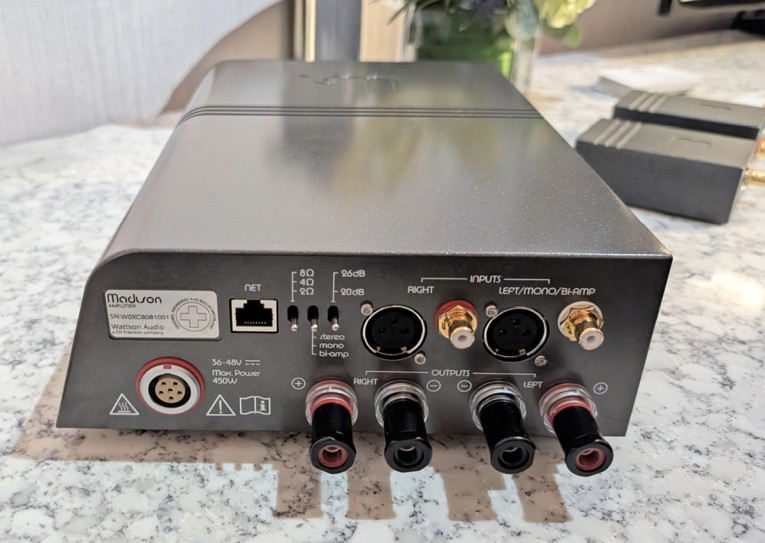
Another new brand for me at the show was Austin, TX-based jPorter Studios. Founder and designer Jeremy Porter brought two new models—the lively and ultra-small $5995 Waterloo Micro and the distinctive-looking $19,985 Wellington tower. The Wellington is an active two-way with 65” of mass-loaded transmission line. The speakers are tri-amped, with 600W of NCORE Class D power driving a waveguide-loaded 1.14” beryllium tweeter paired with dual opposing 9” midwoofers. More interesting to me was the 9.25” × 11” × 13” Waterloo Micro, a three-way acoustic suspension design incorporating a 1” ceramic tweeter, 6” ceramic mid, and 9” glass fiber composite woofer. Despite the size and sealed cabinet, the little Waterloos manage a reasonable 90dB efficiency.
DIY Products
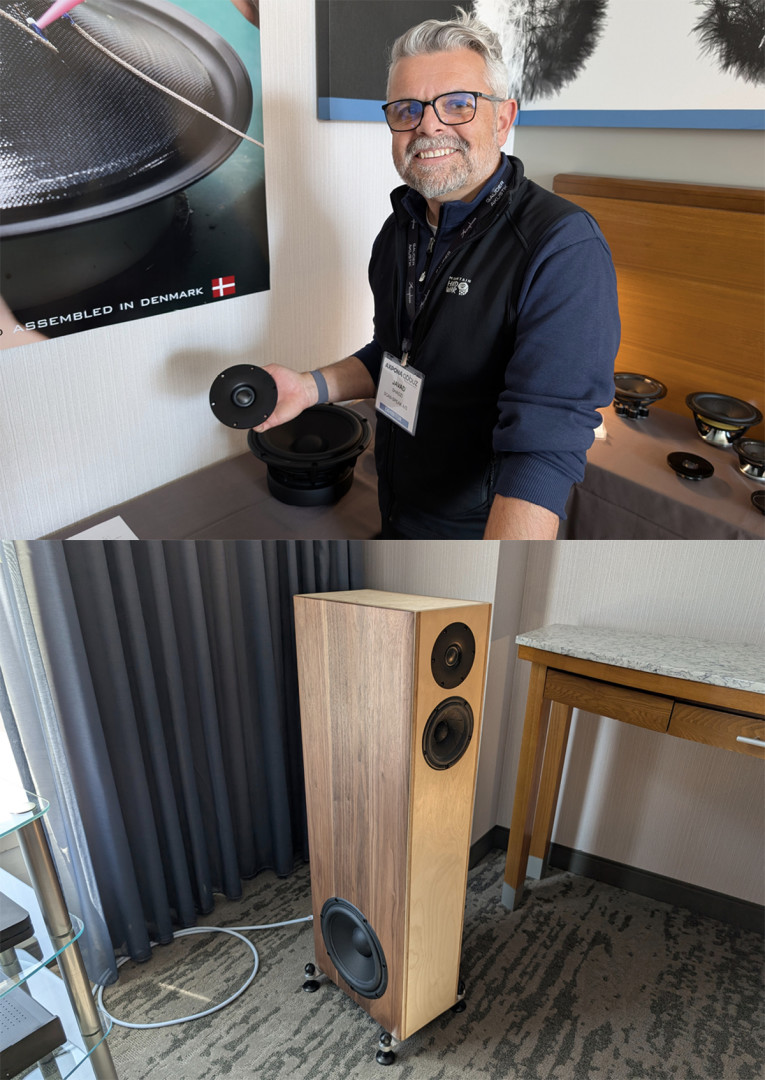
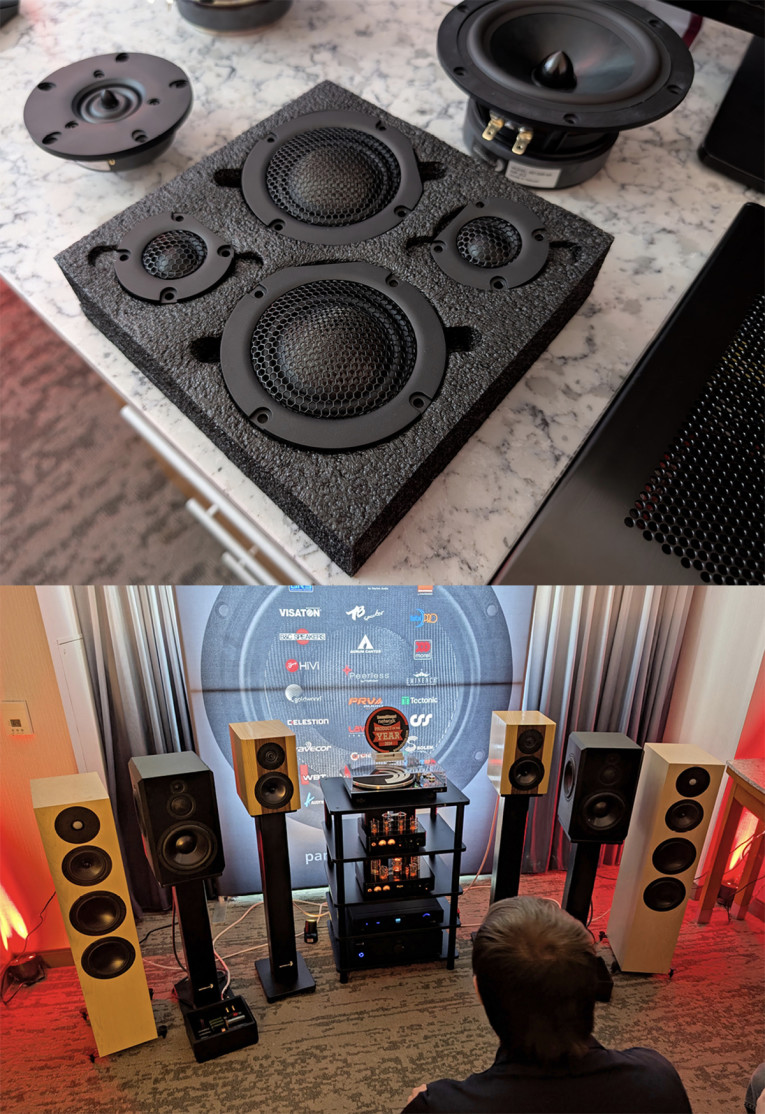
The DIY folks at Madisound had a crazy number of new products, including two that I and other DIYers should find exciting, the new Satori Helios TeXtreme 9.5” two-way flat pack speaker kit, and the Scan-Speak 3Scan three-way kit with a side-firing 11” woofer. For interconnects, Madisound will carry Supra XL Annorum balanced and unbalanced interconnects from Sweden, along with their Super High-Speed USB 3.2, a USB Standard-A male to USB Type-C male cable. For raw tweeters, they had the new SB Acoustics SB29SDNC-C000-4 small neodymium 1” dome, the Scan-Speak Illuminator D3004/6062-00 thin-ply carbon diaphragm (TPCD) Textreme dome and, also from Scan-Speak, the Revelator D2908/716000 TPCD dome. Also new, the RAAL 64-10 Flatfoil true ribbon tweeter.
From Markaudio comes the new MA200M 8” “Multi” full range. From SEAS comes its Extreme L22ROY2-04 8” driver designed for subwoofers, along with their TPCD C16NX001-X-TPCD (E0121-04/06) 5.75” 4Ω coaxial. Finally, Madisound will be carrying Purifi’s ultra low distortion, long stroke PTT10.0X04-NAB-01 10” aluminum cone woofer. Pricing on all those products is still fluid.
Parts Express has not been sleeping on the job either. At the show, they announced the T35 complete flat pack kit, which combines their $200 CFCOMBO-4MP 3/4” and 2” carbon fiber 4Ω tweeter/midrange combo along with a cabinet and crossover. The drivers are matched to within ±1dB. They were also showing the EC30-4, a new ceramic dome tweeter. The estimated price will be $140 but as Josh Wickersham told me via e-mail, “In all, we will have three new kits available this year, but we must navigate these uncertain logistical challenges first.”
The Focus
Unlike CES, the consumer-facing AXPONA show is focused solely on high-quality audio. Other publications provide subjective reviews and “best-of” awards. At audioXpress, we are all about “speeds & feeds,” the tech that stirs our interest and curiosity and am already looking forward to next year’s crazy fun AXPONA. aX
This article was originally published in audioXpress, July 2025